
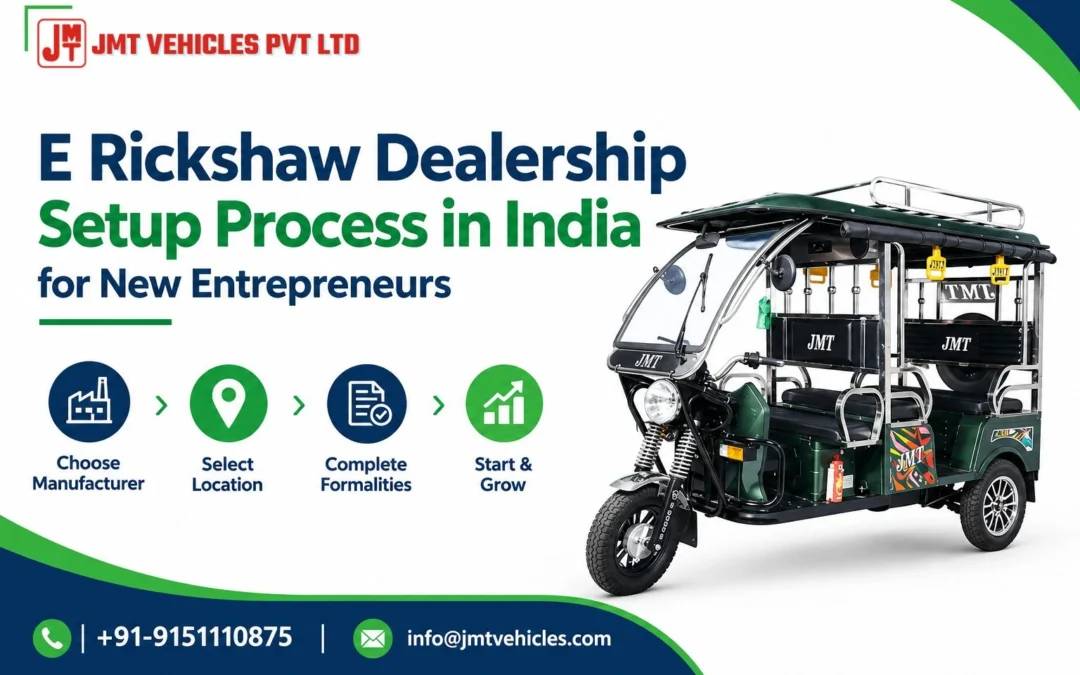
With the emergence of electric vehicles and increasing environmental concerns, many dealerships are entering the EV market by setting up passenger vehicles, motorcycles, bicycles, and even buses. Setting up an e- rickshaw dealership can become a good alternative for some of these enterprises if there is no need to manufacture them.
There are many reasons why one might buy e rickshaws. These electrical vehicles can be used for passenger transport and even delivery of cargo. However, to be successful, one needs to select a proper manufacturer and get ready for customers’ expectations.
Study Your Local Market
As the first thing before starting an e rickshaw business, conduct a research regarding demand of passenger and cargo vehicles in your local market. You can start with studying railway stations, markets, schools, hospitals, industrial zones, and residential colonies since there is usually a demand for passenger and cargo vehicles in these places.
Think about what kind of vehicles do the customers in your area prefer: passenger vehicles or loaders. Passenger e rickshaws suit local transport routes, while loaders are great for shopkeepers, wholesalers, delivery services, and small manufacturing companies.
Market surveys can save you a lot of money in future. Just think that as if you are checking the road before you start driving on it.
Find a Proper Manufacturer to Cooperate with
The key to a successful e rickshaw dealership lies in the selection of a reliable manufacturer. The customers evaluate the dealership on the basis of the following criteria:
- Vehicle quality
- Batteries efficiency
- Spare part availability
- Warranty
- After-sales service.
JMT Vehicles produces electric passenger rickshaws and e-cart loaders suitable for commercial purposes. The company offers models with DC brushless motors, strong steel bodies, mechanical drum brakes, and claimed range of 100-110 km per charge of certain models.
Before making the decision to cooperate, inquire with the manufacturer about the following things: dealership conditions, minimum order quantity, delivery schedule, warranty policy, availability of spare parts, marketing assistance, financial assistance, and territory availability.
Prepare a Suitable Showroom and Service Area
It is not required to have a big showroom to start the business, however, it is important that it is convenient for the customers to come there. Choose a place near a main road or transport zone, market, or industrial zone.
Be sure that there will be enough space to show at least two or four vehicles. As far as customers expect to see the vehicle’s interior, its body strength, suspension, charging points, and comfortable driving, it is important to let them have a close look.
If it is possible, organize test drives since it convinces the customers more than any words. It is also desirable to reserve space for providing basic servicing and storing spare parts since it will help to attract the customers.
Make a Plan for Investment and Inventory
First, you need to invest in dealerships, showroom rent, inventory, staff, brand building, and service center. It is advisable not to purchase many different models, but to concentrate on the most popular variants of passenger and loading vehicles.
Along with vehicles, prepare the money for registration assistance, local marketing, tools, spare parts, insurance advice, and working capital. Most of the customers want to get a possibility of EMI, thus, cooperation with the financial institutions will make your dealership more appealing.
Provide Proper After-Sales Assistance
The dealership process does not end with delivering the vehicle to a customer. This is the time when you can establish long-term relations with your customer. Your customers will need to receive servicing, warranty claims, battery maintenance, charging instructions, and spare parts.
According to JMT Vehicles, the company helps customers with spare parts, technical assistance, warranty information, and financial assistance. Proper after-sales service can help to attract more clients due to positive feedback, recommendations, and further purchases.
Promote Your Dealership Locally
Use offline and online methods to promote your dealership. Put banners near markets and transport zones, distribute brochures, talk to drivers, local business owners. Also, make Google Business Page, post videos of your vehicles on social networks, and add photos of vehicle deliveries to clients.
An e rickshaw dealership becomes more popular and profitable when people know that you provide quality vehicles, clear pricing, servicing, and assistance.
Conclusion
Setting up an e rickshaw dealership can become a good opportunity for the entrepreneur in India’s fast-growing electric mobility market. To be successful, one should pay attention to the following things: market research, quality vehicles, service, and client-oriented relations. With the help of proper manufacturer and sales strategy, you will be able to set up a dealership that will bring you profits.
Frequently Asked Questions
How much money do I need to invest to set up an e rickshaw dealership?
The amount of investment depends on dealership conditions, showroom rent, vehicle stock, service center, and local marketing. Thus, it is better to clarify this issue with the manufacturer.
What kinds of vehicles can I put in my dealership?
You can sell passenger e rickshaws, loading e rickshaws, and e-cart loaders according to the local demand.
Do I need a service center for my dealership?
Basic service center is very useful because the customers will require maintenance, battery checkup, spare parts, and other assistance.
How can I attract more customers to my dealership?
Provide test drives, financial assistance, store spare parts, promote locally, and provide responsive after-sales assistance.
Why should I choose JMT Vehicles to set up e rickshaw dealership?
JMT Vehicles has been producing and selling electric three-wheelers for over a decade and offers passenger and cargo vehicle models, as well as service, spare-parts, and financial assistance.